Unlocking Creative Potential with High-Resolution Holographic Leopard Digital Paper
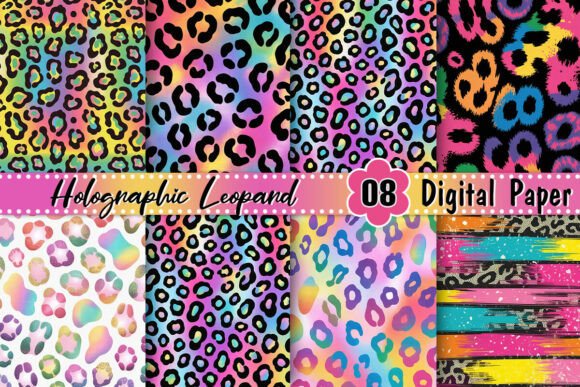
In the rapidly evolving landscape of digital design and print-on-demand services, the demand for unique, eye-catching textures has never been higher. Among the myriad of options available to creators, Holographic Leopard Digital Paper stands out as a distinctive fusion of organic pattern and futuristic finish. This specific asset, comprising eight high-resolution JPG images at 300 DPI, offers a versatile foundation for a wide array of projects ranging from commercial packaging to personal scrapbooking. Understanding the technical specifications and practical applications of non-seamless holographic patterns is essential for professionals and hobbyists alike who wish to elevate their visual storytelling.
The Intersection of Nature and Technology in Design
The appeal of the leopard print lies in its timeless status as a symbol of boldness and luxury. When this classic animal motif is reimagined through a holographic lens, it transforms into something entirely modern. The Holographic Leopard Digital Paper collection captures this duality by overlaying the irregular, organic spots of a leopard with the shifting, iridescent qualities of a hologram. Unlike standard flat prints, these digital sheets simulate the way light interacts with metallic or foil surfaces, creating a sense of depth and movement that static colors cannot achieve.
For designers, this means the ability to convey sophistication and energy simultaneously. The holographic effect suggests innovation and premium quality, while the leopard pattern grounds the design in a recognizable, fashionable aesthetic. This combination is particularly effective in industries where standing out on a shelf or a screen is paramount. Whether used for a cosmetic brand looking to disrupt the market or an educator creating engaging classroom materials, the psychological impact of this texture is immediate and potent.
Technical Specifications and File Integrity
When selecting digital assets for professional use, resolution and file format are critical factors that determine the final output quality. This specific collection of Holographic Leopard Digital Paper is delivered as eight distinct JPG files. The choice of JPG ensures broad compatibility across virtually all design software, from industry standards like Adobe Photoshop and Illustrator to user-friendly platforms like Canva and Procreate.
The most significant technical advantage of this set is the 300 DPI (dots per inch) resolution. In the world of printing, 300 DPI is the gold standard for sharp, crisp imagery. Many free or low-cost digital papers found online are often optimized only for screen display at 72 DPI, which results in pixelation and blurriness when printed. By providing files at 300 DPI, this collection ensures that the intricate details of the leopard spots and the subtle gradients of the holographic sheen remain intact, regardless of the print size. This makes the files suitable for large-format applications such as posters, wrapping paper rolls, or fabric transfers, not just small stickers or business cards.
It is important to note that these images are non-seamless. While seamless patterns are ideal for tiling backgrounds where the repeat must be invisible, non-seamless sheets offer a different kind of creative freedom. They function more like individual sheets of decorative paper, each with its own unique composition and lighting variation. This characteristic prevents the "wallpaper effect" where a pattern looks obviously repeated, allowing for more natural and varied designs when multiple sheets are used in a collage or layout.
Diverse Applications Across Industries
The versatility of Holographic Leopard Digital Paper allows it to permeate various sectors. Its application is limited only by the imagination of the user, but several key areas demonstrate its particular strength.
Commercial Branding and Packaging
In the realm of e-commerce and retail, unboxing experiences have become a crucial part of brand identity. Small business owners selling handmade soaps, jewelry, or boutique clothing can utilize these digital sheets to create custom tissue paper, box liners, or shipping labels. The holographic finish implies a high-value product, potentially justifying a higher price point in the minds of consumers. For example, a limited-edition perfume line could use the leopard holographic texture on its outer sleeve to suggest wildness and allure, distinguishing itself from competitors using standard matte finishes.
Digital Planning and Stationery
The stationery community, particularly those involved in digital planning for tablets, constantly seeks fresh textures to organize their lives stylishly. These eight JPG images can be imported directly into note-taking apps to serve as divider pages, cover sheets, or background layers for stickers. The high resolution ensures that when users zoom in on their tablets, the texture remains sharp. Educators creating printable rewards charts or certificate borders for students may also find the bold pattern engaging, especially for older students who appreciate trendy aesthetics over childish cartoons.
Fashion and Textile Prototyping
Fashion designers and textile artists often require digital mockups before committing to expensive fabric printing. Holographic Leopard Digital Paper serves as an excellent proxy for holographic vinyl or foil-printed fabrics. Designers can drape these digital textures over garment sketches to visualize how the light would play across the curves of a dress or the panels of a jacket. This reduces waste and cost during the prototyping phase, allowing for rapid iteration of design concepts.
Workflow Integration and Practical Usage
Incorporating these digital assets into a workflow is straightforward, yet there are best practices to maximize their potential. Because the files are non-seamless, they are best treated as individual elements rather than infinite backgrounds. Here is a logical approach to utilizing the set effectively:
- Asset Organization: Upon downloading the eight JPG files, organize them in a dedicated folder within your project directory. Naming conventions should reflect the specific variation or color shift if apparent, aiding quick selection during the design process.
- Layering Techniques: In photo editing software, place the Holographic Leopard Digital Paper on a layer above your base image. Utilize blending modes such as "Overlay," "Soft Light," or "Multiply" to integrate the texture with underlying graphics. This technique allows the holographic shine to interact with the colors beneath it, creating a cohesive look rather than a simple sticker effect.
- Masking and Clipping: To apply the texture to specific shapes, such as text or product silhouettes, use clipping masks. This confines the leopard pattern strictly to the desired area, maintaining clean edges while showcasing the internal detail of the 300 DPI file.
- Print Preparation: If the end goal is physical production, ensure the color profile is converted to CMYK if required by your specific printer, although many modern digital printers accept RGB files with excellent results. Always request a proof print to verify that the holographic simulation translates well to the specific substrate being used, whether it is glossy cardstock or matte vinyl.
Considerations for Non-Seamless Patterns
Working with non-seamless files requires a shift in mindset compared to tiled patterns. Since the edges of the image contain distinct visual information that does not wrap around, designers must be mindful of cropping. When using these sheets for web backgrounds, one might choose to center the image and let the edges fade or frame the content, rather than attempting to tile them horizontally or vertically. This limitation is actually an advantage for collage work, where the unique framing of each of the eight images adds variety to the composition. It prevents the monotony that can occur when a single seamless tile is repeated excessively.
The Value of High-Quality Digital Assets
In an era where content is king, the quality of visual assets directly correlates with the perceived value of the final product. Using low-resolution or generic textures can inadvertently signal a lack of attention to detail. Conversely, utilizing a specialized set like Holographic Leopard Digital Paper demonstrates a commitment to quality. The 300 DPI specification is not merely a technical number; it represents the difference between a professional-grade deliverable and an amateur draft.
Furthermore, the exclusivity of a curated set of eight images provides enough variety to maintain consistency across a project without becoming repetitive. A brand can use one variation for social media posts, another for email headers, and a third for product packaging, creating a unified visual language that is dynamic rather than static. This consistency builds brand recognition, as audiences begin to associate the specific holographic leopard aesthetic with the creator's identity.
Future Trends in Digital Textures
The trajectory of digital design is moving towards hyper-realism and tactile simulation. As screens improve in resolution and color accuracy, the line between digital and physical continues to blur. Textures that mimic physical materials like foil, embossing, and holography are becoming increasingly popular because they satisfy a human desire for tangibility in a digital space. The Holographic Leopard Digital Paper fits perfectly into this trend, offering a sensory experience through visual means. As augmented reality (AR) and virtual reality (VR) spaces expand, these high-fidelity textures will become even more critical for creating immersive environments that feel rich and detailed.
Ultimately, the utility of these digital sheets extends beyond mere decoration. They are tools for communication, branding, and artistic expression. By leveraging the high resolution, unique non-seamless composition, and striking visual style of this collection, creators can produce work that resonates with audiences on both an aesthetic and emotional level. Whether for a corporate rebrand, a school project, or a personal artistic endeavor, the integration of such specialized digital paper marks a step toward more sophisticated and impactful visual design.