Evaluating the Vintage Chicken Seamless Pattern for Kids and Easter Projects
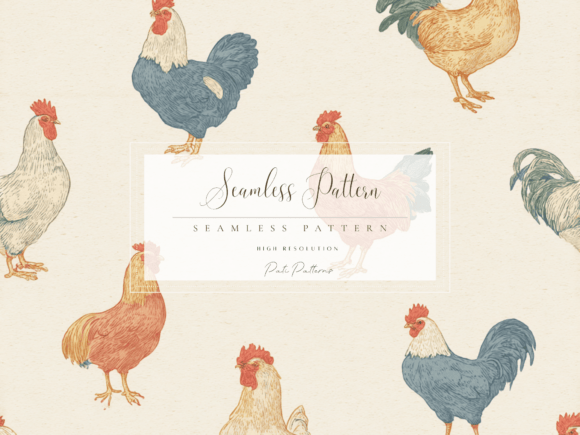
When curating visual assets for spring-themed projects, the choice of pattern significantly influences the final aesthetic. The Vintage Chicken Seamless Pattern for Kids and Easter represents a specific niche within digital design resources, blending nostalgic farm imagery with the softness required for children's decor. Unlike generic animal prints that often rely on bright, primary colors or cartoonish exaggerations, this style leans into a muted, heritage palette. It features charming roosters and hens rendered in a way that feels elegant yet playful, making it a versatile option for creators who need to bridge the gap between adult sophistication and child-friendly whimsy.
Understanding what makes this specific pattern distinct requires looking at its intended application and technical composition. Designed as a repeating farm animal motif, it serves as a foundational layer for various creative outputs. Whether applied to nursery wall art, seasonal invitations, or fabric printing, the seamless nature of the file ensures that the design flows without visible breaks or awkward edges. This continuity is crucial for large-scale applications like wrapping paper or background textures in digital planners, where interruptions in the pattern can detract from the professional quality of the end product.
Comparing Aesthetic Styles: Vintage vs. Modern Alternatives
In the broader landscape of Easter and spring design resources, creators often face a decision between modern minimalist styles, hyper-realistic photography, and vintage illustrations. The Vintage Chicken Seamless Pattern occupies a middle ground that offers unique advantages depending on the project goals.
Modern alternatives frequently utilize flat vector graphics with bold outlines and saturated colors. While these are excellent for high-contrast digital screens or contemporary branding, they can sometimes feel too stark for cozy farmhouse projects or traditional holiday crafts. Conversely, photographic patterns offer realism but lack the stylized charm that allows for easy integration with text and other graphic elements. The vintage approach, characterized by soft colors and hand-drawn textures, provides a warmth that modern vectors often miss. It evokes a sense of nostalgia that resonates well with audiences aged 20–50 who may be seeking a "slow living" or rustic aesthetic for their homes and events.
However, this style is not without its tradeoffs. The softer, muted tones of a vintage palette may not provide sufficient contrast for certain accessibility requirements or for projects intended to pop on low-resolution mobile screens. If the goal is a high-energy, neon-bright Easter campaign, this pattern would likely be the wrong choice. It is best suited for contexts where the objective is to create a calming, inviting atmosphere rather than grabbing immediate attention through shock value.
Technical Considerations and File Formats
Beyond aesthetics, the utility of any digital pattern depends heavily on its technical specifications. When evaluating the Vintage Chicken Seamless Pattern for Kids and Easter, several factors determine its compatibility with your workflow. The inclusion of a high-resolution file at 216 DPI is a critical specification. For digital use, such as web backgrounds or social media graphics, this resolution is more than adequate. However, for physical products like fabric printing or large-format posters, 216 DPI sits on the lower end of the professional spectrum. Standard professional print often recommends 300 DPI to ensure crisp edges, especially when viewed up close.
The format provided is typically an individual PNG file with a background. This non-transparent structure simplifies usage for beginners who want to drag and drop the image directly into a canvas without worrying about layering. Yet, for advanced users working in Photoshop or Procreate, a transparent background might be preferred to allow the pattern to sit over colored papers or textured overlays. The lack of transparency means the user is locked into the provided background color unless they possess the skills to manually remove it, which can be time-consuming with intricate vintage details.
Compatibility with editing tools is another decision factor. The pattern is designed for easy integration into platforms like Canva, Cricut, and digital planning apps. For users whose primary workflow exists within these ecosystems, the file structure is optimized for speed. However, those requiring vector scalability (SVG or EPS formats) to resize the roosters and hens infinitely without pixelation will find this raster-based PNG limiting. If your project involves scaling the design from a small greeting card to a massive billboard, a vector alternative would be a necessary consideration.
Licensing and Commercial Viability
For professionals and side-hustlers, the licensing terms attached to a digital asset are just as important as the visual design. The Vintage Chicken Seamless Pattern typically comes with a commercial license that allows for use in unlimited end products, both digital and physical. This flexibility is a significant strength for entrepreneurs creating Easter merchandise, scrapbooking kits, or custom nursery decor. It removes the barrier of needing to negotiate individual licenses for each project type.
It is vital to note the restrictions inherent in these agreements. While you can sell products made with the pattern, you generally cannot resell the original files themselves. This means you cannot include the raw PNG in a "digital paper pack" for other designers to use. Understanding this distinction helps prevent copyright infringement. If your business model relies on selling design assets rather than finished goods, this pattern would not be a suitable resource, and you would need to look for resources with an extended developer license or create your own originals.
Best-Fit Scenarios and Practical Applications
Determining whether this pattern is the right choice involves matching its characteristics to specific use cases. Here are scenarios where the Vintage Chicken Seamless Pattern for Kids and Easter excels:
- Nursery and Kids' Room Decor: The soft vintage colors create a soothing environment suitable for sleep spaces, avoiding the overstimulation of brighter patterns.
- Seasonal Invitations and Stationery: The elegant aesthetic elevates party invites for Easter brunches or spring gatherings, appealing to adult hosts while remaining fun for children.
- Fabric and Textile Projects: Ideal for sewing quilts, tote bags, or aprons where a repeating motif adds cohesion to the textile design.
- Digital Planners and Journals: The seamless nature works perfectly as a background layer in GoodNotes or Notability, adding texture without obscuring handwritten notes.
Conversely, there are situations where an alternative approach is advisable. If you are designing for a corporate brand that requires strict adherence to specific Pantone colors, the fixed palette of a vintage illustration may not align with brand guidelines. Similarly, for projects requiring complex animation or interactive elements, a static PNG pattern may need to be recreated in a motion-graphics friendly format.
Making an Informed Decision
Selecting the perfect design resource is rarely about finding the "best" option in a vacuum; it is about finding the best fit for your specific constraints and goals. The Vintage Chicken Seamless Pattern for Kids and Easter offers a compelling solution for those seeking a balance between charm and professionalism. Its strengths lie in its ready-to-use nature, its cohesive aesthetic, and its broad commercial applicability for finished goods.
However, prudent creators must weigh these benefits against the limitations of resolution and file format. If your project demands ultra-high-definition print quality or vector scalability, you may need to supplement this resource with higher-spec assets or commission custom work. By understanding the tradeoffs between vintage raster patterns and modern vector alternatives, you can allocate your budget and time more effectively. Ultimately, this pattern serves as a robust tool in the creative toolkit, particularly for those aiming to capture the warm, nostalgic spirit of spring and family traditions.