Evaluating Fall Linen Plaid Seamless Digital Paper for Creative Projects
In the realm of digital design and crafting, the selection of background assets plays a pivotal role in defining the aesthetic tone of a project. Among the myriad of options available, Fall Linen Plaid Seamless Digital Paper has emerged as a versatile choice for creators seeking a blend of rustic charm and structural reliability. This specific type of digital asset combines the visual texture of linen with the classic pattern of plaid, rendered in an autumnal color palette. Understanding the nuances of this resource is essential for designers, hobbyists, and business owners who need to determine if it aligns with their specific production requirements.
Defining the Asset: Texture and Pattern Integration
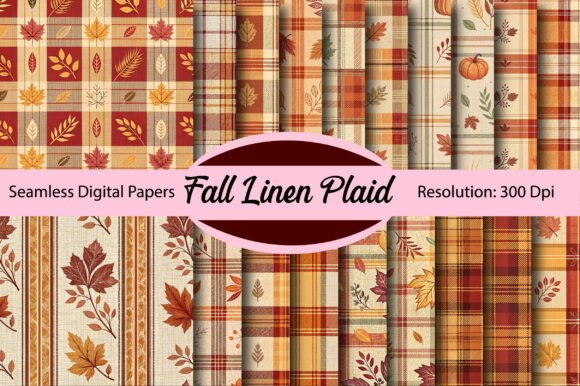
At its core, Fall Linen Plaid Seamless Digital Paper is a high-resolution raster image designed to tile infinitely without visible seams. The "linen" component refers to the simulated fabric texture overlaid on the image, providing a tactile appearance that mimics woven cloth. This adds depth and realism that flat colors often lack. The "plaid" element introduces a geometric structure, typically featuring intersecting horizontal and vertical bands in multiple colors. When combined with a "fall" theme, the color scheme usually incorporates warm hues such as burnt orange, deep red, mustard yellow, olive green, and earthy browns.
These files are typically provided in JPEG format at a resolution of 300 DPI (dots per inch). This specification is critical because 300 DPI is the industry standard for high-quality printing. It ensures that when the image is scaled or printed, the details remain sharp rather than pixelated. The seamless nature of the pattern means that the edges of the image match perfectly when placed side-by-side, allowing users to cover large areas—such as website backgrounds or large-format packaging—without interruption in the design flow.
Practical Applications and Use Cases
The versatility of these digital papers makes them suitable for a wide array of applications. For those involved in print-on-demand services or physical product creation, the 300 DPI resolution is a primary driver for selection. These patterns are highly effective for:
- Packaging Design: Creating custom boxes, bags, or wrapping paper that conveys a cozy, seasonal brand identity.
- Stationery and Cards: Serving as the base layer for greeting cards, invitations, or thank-you notes where a textured background adds perceived value.
- Scrapbooking and Papercraft: Both digital and physical scrapbookers utilize these patterns to create cohesive layouts. The linen texture provides a neutral yet interesting backdrop for photos and embellishments.
- Fashion Projects: Designers may use these patterns for textile printing simulations or actual fabric production for seasonal apparel lines.
In the digital sphere, these assets function effectively as website backgrounds or blog headers. Because the pattern is seamless, it can be set to repeat across any screen size without breaking the visual continuity. Additionally, they are popular for creating party packs, including banners, cupcake toppers, and table runners, where a unified theme is necessary for event cohesion.
Benefits of High-Resolution Seamless Patterns
One of the significant advantages of utilizing a dedicated Fall Linen Plaid Seamless Digital Paper is the time efficiency it offers. Creating a realistic linen texture and a balanced plaid pattern from scratch requires advanced skills in graphic design software and a keen eye for detail. By leveraging pre-made assets, creators can bypass the initial design phase and focus on layout and composition.
Furthermore, the transparent pattern capability often associated with these downloads (or the ability to easily isolate the pattern in editing software) allows for greater flexibility. Users can overlay the plaid design onto different colored backgrounds or integrate it into complex compositions without being restricted by a solid white or black base. The 300 DPI specification ensures that the asset is future-proof; a file created today can be used for a small business card tomorrow and a large poster next year without needing to source a new image.
Considerations and Tradeoffs
While the benefits are substantial, there are tradeoffs and considerations that buyers must evaluate. The primary limitation lies in the file format. Since these papers are often distributed as JPEGs, they utilize lossy compression. While generally acceptable for photographic textures like linen, heavy compression can sometimes introduce artifacts around the sharp lines of a plaid pattern. Users requiring absolute precision for vector-based scaling might find that a vector file (SVG or EPS) offers more control, though vectors often lack the realistic noise and grain of a true linen texture.
Another consideration is color management. Screens display colors in RGB (Red, Green, Blue), while printers use CMYK (Cyan, Magenta, Yellow, Key/Black). A Fall Linen Plaid pattern that looks vibrant on a monitor may appear duller or shift in hue when printed. Users intending these papers for professional packaging or fashion projects should perform test prints to ensure the autumnal tones match their brand guidelines. Additionally, because the pattern is seamless, it can sometimes create a repetitive visual rhythm that feels monotonous if used over a very large area without variation or interruption by other design elements.
When to Choose This Asset vs. Alternatives
Deciding whether Fall Linen Plaid Seamless Digital Paper is the right fit depends largely on the desired outcome and the medium of delivery. This asset is a strong fit when the goal is to evoke a sense of warmth, tradition, and tactile comfort. It is particularly effective for brands targeting audiences who appreciate artisanal or handcrafted aesthetics. If the project involves digital scrapbooking or creating wallpapers for devices, the seamless nature and rich texture provide an immediate upgrade over flat colors.
However, alternatives may be worth considering in specific scenarios. If the project requires infinite scalability without any loss of quality regardless of size (e.g., massive billboard advertising), a vector-based plaid pattern might be superior despite lacking the linen texture. Similarly, if the design requires a modern, sleek, or minimalist look, the rustic nature of linen and the busyness of a plaid pattern might clash with the intended message. In such cases, a solid color with a subtle gradient or a geometric abstract pattern could be more appropriate.
For users working strictly in web environments where load speed is critical, high-resolution 300 DPI JPEGs might be too large in file size. In these instances, optimizing the image for web resolution (72 DPI) is necessary, which negates the benefit of the high-res file for print purposes. Therefore, it is often advisable to maintain both a high-res version for print and a compressed version for digital use.
Making an Informed Decision
Selecting the right digital paper involves balancing aesthetic desires with technical constraints. Fall Linen Plaid Seamless Digital Paper offers a compelling solution for projects that demand a seasonal, textured, and professional look. Its utility spans from crafts and printing to comprehensive branding packages. By understanding the implications of the 300 DPI resolution, the JPEG format, and the seamless tiling capability, creators can effectively judge whether this asset will elevate their work.
Ultimately, the value of this resource lies in its ability to bridge the gap between digital convenience and physical texture. Whether used as a blog background to engage readers or as the foundation for a line of holiday cards, it provides a reliable canvas. Evaluating your specific needs regarding print quality, color accuracy, and stylistic tone will ensure that this digital paper serves as a functional tool rather than just a decorative element.